

Can You Use Jet Dry To Clean Windows
Windows 10 and 11 tips
sixteen ways to speed upwards Windows 10
If you want to optimize Windows x, take a few minutes to try out these tips to speed upwardly your PC and make information technology less prone to performance and system issues.
 By
By
Contributing Editor, Computerworld |
Desire Windows 10 to run faster? Nosotros've got help. In just a few minutes you can try out these tips; your machine will be zippier and less prone to performance and system issues.
1.Change your ability settings
If you're using Windows 10'southward "Ability saver" programme, you're slowing down your PC. That programme reduces your PC's functioning in order to save free energy. (Even desktop PCs typically accept a "Power saver" plan.) Changing your power program from "Power saver" to "Loftier performance" or "Balanced" will give you an instant performance boost.
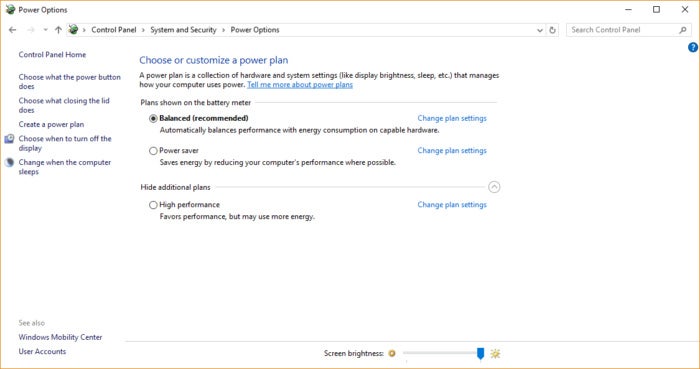
To exercise it, launch the Control Panel app, then select Hardware and Sound > Power Options. You'll typically see two options: "Balanced (recommended)" and "Power saver." (Depending on your make and model, you lot might see other plans here also, including some branded by the manufacturer.) To meet the "High functioning" setting, click the downwardly pointer by "Testify additional plans."
 IDG
IDG Change your power settings in Command Console to give your PC a performance heave. (Click image to enlarge it.)
To change your ability setting, simply choose the 1 you desire, and then go out Command Panel. "High performance" gives you the most oomph, but uses the almost power; "Balanced" finds a happy medium betwixt power use and better performance; and "Power saver" does everything information technology can to give yous as much battery life equally possible. Desktop users have no reason to choose "Power saver," and even laptop users should consider the "Balanced" option when unplugged — and "High functioning" when connected to a ability source.
2. Disable programs that run on startup
One reason your Windows x PC may experience sluggish is that you've got as well many programs running in the groundwork — programs that you lot rarely or never use. Terminate them from running, and your PC volition run more smoothly.
Start past launching the Chore Director: Press Ctrl-Shift-Esc, right-click the lower-correct corner of your screen and select Chore Manager, or type task manager into the Windows 10 search box and press Enter. If the Task Managing director launches every bit a meaty app with no tabs, click "More details" at the bottom of your screen. The Task Managing director will then appear in all of its full-tabbed glory. In that location's enough y'all tin practise with it, but we're going to focus merely on killing unnecessary programs that run at startup.
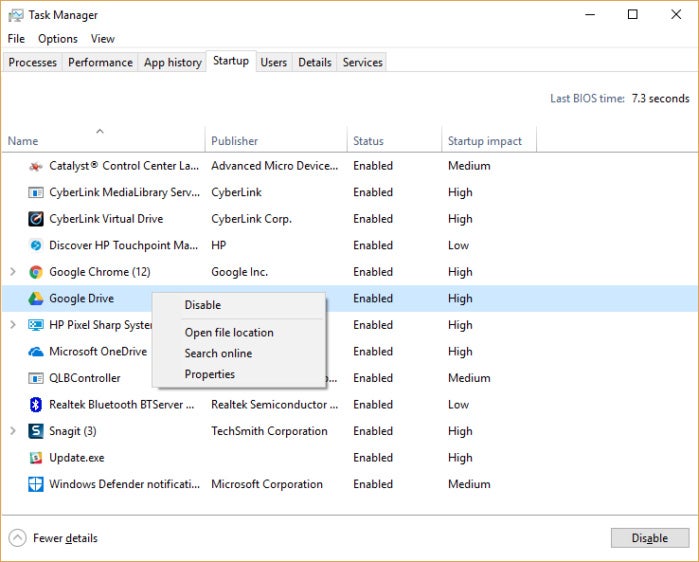
Click the Startup tab. Yous'll see a list of the programs and services that launch when yous beginning Windows. Included on the listing is each program's name besides as its publisher, whether it's enabled to run on startup, and its "Startup impact," which is how much it slows down Windows ten when the system starts up.
To stop a plan or service from launching at startup, right-click it and select "Disable." This doesn't disable the plan entirely; it only prevents it from launching at startup — you can always run the application after launch. Also, if you subsequently make up one's mind you want it to launch at startup, you can just return to this area of the Job Manager, right-click the application and select "Enable."
 IDG
IDG You can use the Job Director to help get data about programs that launch at startup and disable any y'all don't need. (Click image to enlarge it.)
Many of the programs and services that run on startup may be familiar to you lot, like OneDrive or Evernote Clipper. But y'all may not recognize many of them. (Anyone who immediately knows what "bzbui.exe" is, please raise your hand. No off-white Googling it first.)
The Task Managing director helps y'all go data well-nigh unfamiliar programs. Right-click an item and select "Backdrop" for more information about it, including its location on your difficult disk, whether it has a digital signature, and other data such equally the version number, the file size and the last time information technology was modified.
Yous tin can besides right-click the detail and select "Open up file location." That opens File Explorer and takes it to the binder where the file is located, which may requite you another clue nigh the programme'due south purpose.
Finally, and near helpfully, you can select "Search online" after you right-click. Bing volition and then launch with links to sites with information most the programme or service.
If you're really nervous almost one of the listed applications, you can go to a site run by Reason Software called Should I Cake It? and search for the file name. You'll usually detect very solid information about the program or service.
Now that you've selected all the programs that you want to disable at startup, the next time you restart your computer, the system will be a lot less concerned with unnecessary programs.
three. Use ReadyBoost to speed upwardly disk caching
Windows 10 regularly stores cached information on your hard disk, and so when it needs the data, fetches it from in that location. The time it takes to fetch cached data depends on the speed of your hd. If y'all have a traditional hard disk instead of an SSD, there'south a trick that tin can assistance speed up your cache: use Windows' ReadyBoost feature. It tells Windows to cache information to a USB flash drive, which is faster than a hard disk. Fetching information from that speedier cache should speed upwards Windows.
First, plug a USB wink drive into one of your PC'south USB ports. The flash bulldoze needs to support at least USB 2.0, and preferably USB 3 or faster. The faster your wink drive, the more of a speed boost you should see. Also, look for a flash drive that is at least double the size of your PC's RAM for maximum performance.
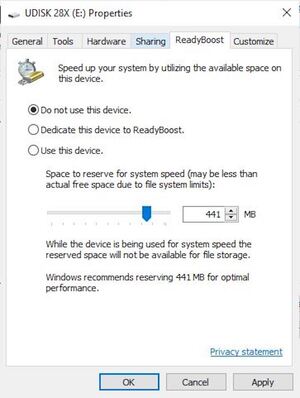
After you plug in in the drive, open up File Explorer and click "This PC." Look for the flash bulldoze. It may accept an odd proper name, like UDISK 28X, or something even less-obvious. Right-click it, choose Properties and click the ReadyBoost tab.
 Microsoft
 Plow on ReadyBoost from this screen to speed up your PC.
You lot'll come to a screen that asks whether yous desire to utilise the flash bulldoze as a cache and recommends a cache size. Leave the enshroud size as is or change it if you like. Then select "Dedicate this device to ReadyBoost" and click Apply and then click OK.
(Notation that if you lot run into the message, "This device cannot be used for ReadyBoost" when you click the ReadyBoost tab it means your wink drive doesn't encounter ReadyBoost's minimum performance standards, then y'all'll accept to insert a new ane.)
As you lot employ your computer, ReadyBoost will start filling the cache with files, so y'all may notice an increment in disk activity. Depending on how much you lot employ your PC, it can take a few days for your cache to fill and offer maximum improved performance. If yous don't see an increase in performance, try a wink disk with more capacity.
Notation: If you take an SSD, you won't get any extra speed from ReadyBoost, and it might even hurt operation. So don't use this on a system with an SSD.
4. Shut off Windows tips and tricks
As you use your Windows 10 PC, Windows keeps an eye on what yous're doing and offers tips about things you might want to exercise with the operating system. In my feel, I've rarely if ever constitute these "tips" helpful. I also don't like the privacy implications of Windows constantly taking a virtual await over my shoulder.
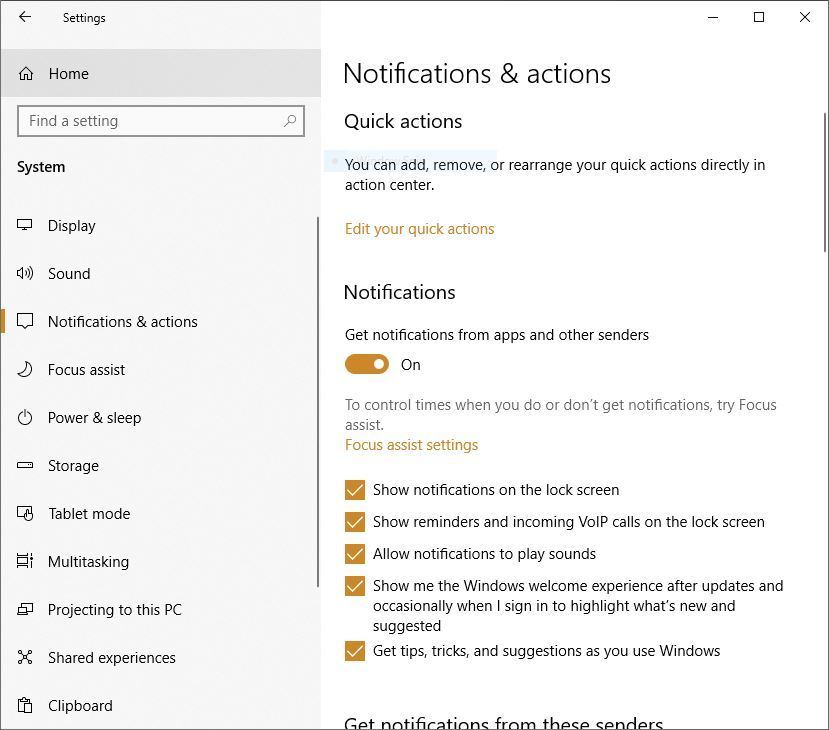
Windows watching what you're doing and offering communication can as well make your PC run more sluggishly. So if yous want to speed things up, tell Windows to terminate giving you lot advice. To practice and then, click the Showtime button, select the Settings icon so go to System > Notifications & deportment. Roll down to the Notifications department and uncheck the box marked "Get tips, tricks, and suggestions as y'all use Windows."
 IDG
IDG Turning off Windows' suggestions for you should assistance things run more smoothly (and give you lot dorsum a measure of privacy). (Click epitome to overstate information technology.)
That'll do the play tricks.
5. Stop OneDrive from syncing
Microsoft'southward deject-based OneDrive file storage, built into Windows 10, keeps files synced and upward to date on all of your PCs. It's also a useful backup tool then that if your PC or its hard disk dies, you even so have all your files intact, waiting for you to restore them.
 IDG
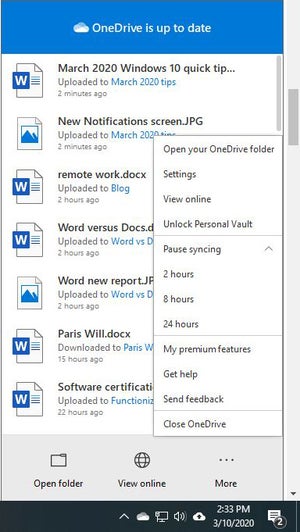
IDG Here'southward how to plow off OneDrive syncing temporarily, to see if that boosts system functioning. (Click prototype to overstate information technology.)
It does this by constantly syncing files between your PC and cloud storage — something that can also tedious downward your PC. That's why one way to speed up your PC is to stop the syncing. Before you turn it off permanently, though, you'll want to check whether it is really slowing downward your PC.
To do so, right-click the OneDrive icon (information technology looks similar a cloud) in the notification area on the right side of the taskbar, so click the More button at the lesser of the screen. From the popup screen that appears, click "Pause syncing" and select either 2 hours, eight hours or 24 hours, depending upon how long y'all want it paused. During that time, gauge whether you lot're seeing a noticeable speed boost.
If so, and yous decide yous do indeed want to plow off syncing, right-click the OneDrive icon, and from the popup, select Settings > Business relationship. Click "Unlink this PC," and then from the screen that appears, click "Unlink business relationship." When you do that, you'll however exist able to save your files to your local OneDrive binder, simply information technology won't sync with the cloud.
If yous find that OneDrive slows down your PC simply adopt to keep using it, you can attempt to troubleshoot OneDrive bug. For info on how to do that, cheque out Microsoft'southward "Fix OneDrive sync bug" page.
6. Utilize OneDrive Files on-Demand
Some users may not want to cease OneDrive from syncing; doing so defeats its purpose of making sure you accept the latest files on whatever device you use. And information technology would also hateful you lot won't exist able to utilise OneDrive as a style to safely back up files.
But at that place'due south a way to become the all-time of both worlds: Y'all can continue syncing to an absolute minimum and only practice it when admittedly necessary. You'll speed upwardly performance, and still go the best of what OneDrive has to offer.
To do this, y'all use Windows' OneDrive Files on-Need feature. With it, you can choose to keep merely certain files on your PC, but notwithstanding have access to all your other OneDrive files in the cloud. When you desire to use ane of those online files, you open it directly from the cloud. With fewer files on your PC sync, y'all should run into a functioning boost.
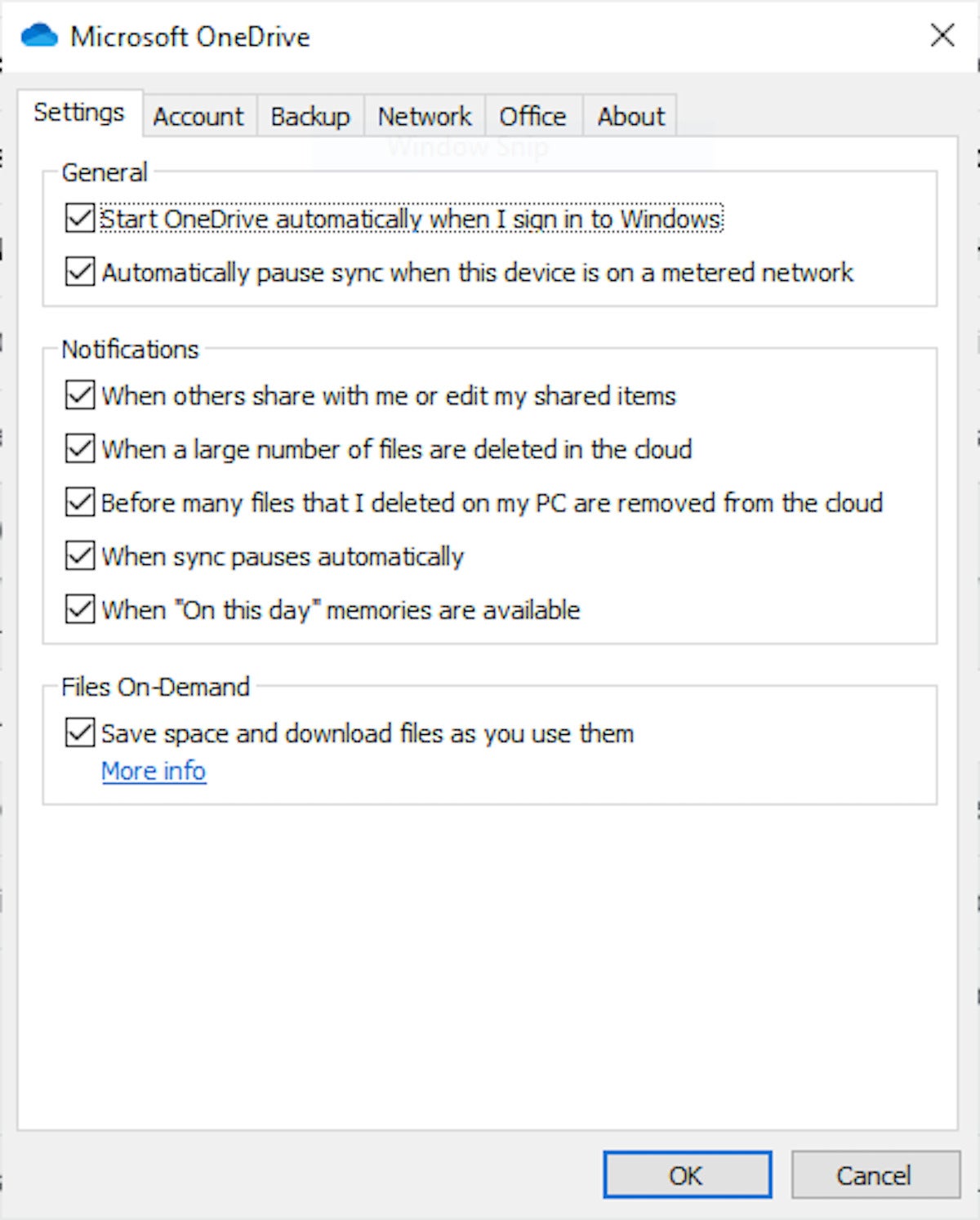
Right-click the OneDrive icon on the right side of the Taskbar and select Settings, so click the Settings tab on the dialog box that appears. Bank check the box next to Files On-Demand. Now click the OneDrive icon and select Open Folder. OneDrive appears in a File Explorer window. Right-click a folder whose files you lot desire stored merely in the deject, merely not on your PC, then select "Gratuitous up space." Files from that binder will exist removed from your disk, but still kept in OneDrive in the cloud.
For every folder whose files you lot want kept on your PC, right-click the folder and select "Always Keep on this Device." You lot can alter the options on any binder at any fourth dimension by right-clicking it and choosing what you want done.
 Microsoft
 Use this dialog box to turn on OneDrive Files on-Demand
If you change your mind and desire all your files stored locally and kept in sync via OneDrive, get dorsum to the OneDrive settings dialog box and uncheck the box next to Files on-Demand.
Notation that OneDrive Files on-Demand is available simply on Windows Version 1709 and higher.
7. Turn off search indexing
Windows 10 indexes your hard disk in the background, allowing you lot — in theory — to search your PC more quickly than if no indexing were being done. Only slower PCs that use indexing can run across a performance hitting, and you can requite them a speed boost past turning off indexing. Even if y'all have an SSD deejay, turning off indexing can improve your speed, considering the abiding writing to deejay that indexing does tin eventually slow down SSDs.
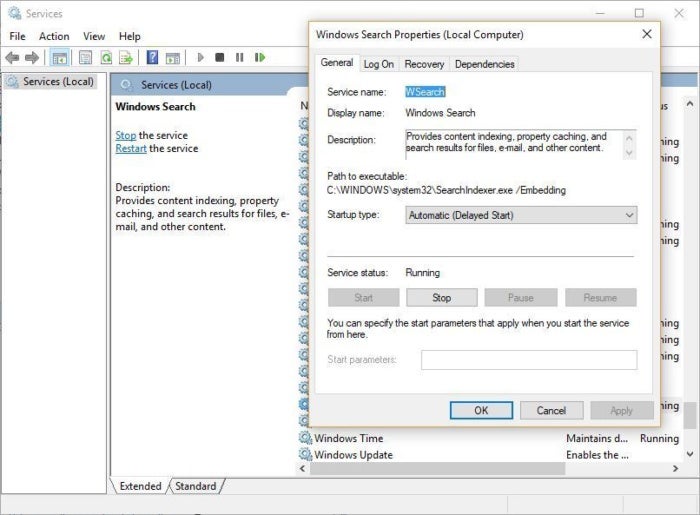
To become the maximum benefit in Windows ten, you demand to plough indexing off completely. To do so, type services.mscin the Windows x search box and press Enter. The Services app appears. Scroll downwards to either Indexing Service or Windows Search in the list of services. Double-click it, and from the screen that appears, click Finish. So reboot your machine. Your searches may exist slightly slower, although yous may not notice the divergence. But you shouldgo an overall performance boost.
 IDG
IDG Here's how to plough off Windows 10 indexing. (Click image to enlarge information technology.)
If yous'd like, you can turn off indexing only for files in certain locations. To exercise this, type indexin the Windows 10 search box and click the Indexing Options result that appears. The Indexing Options page of the Control Panel appears. Click the Modify push button, and you'll come across a list of locations that are being indexed, such as Microsoft Outlook, your personal files, so on. Uncheck the box next to whatever location, and it will no longer exist indexed.
8. Clean out your hard disk
If y'all've got a bloated hard disk filled with files you lot don't need, you could be slowing down your PC. Cleaning information technology out can give you a speed boost. Windows 10 has a surprisingly useful built-in tool for doing this called Storage Sense. Go to Settings > System > Storage and at the top of the screen, motion the toggle from Off to On. When you do this, Windows constantly monitors your PC and deletes old junk files you no longer need — temporary files, files in the Downloads folder that haven't been changed in a month, and old Recycle Bin files.
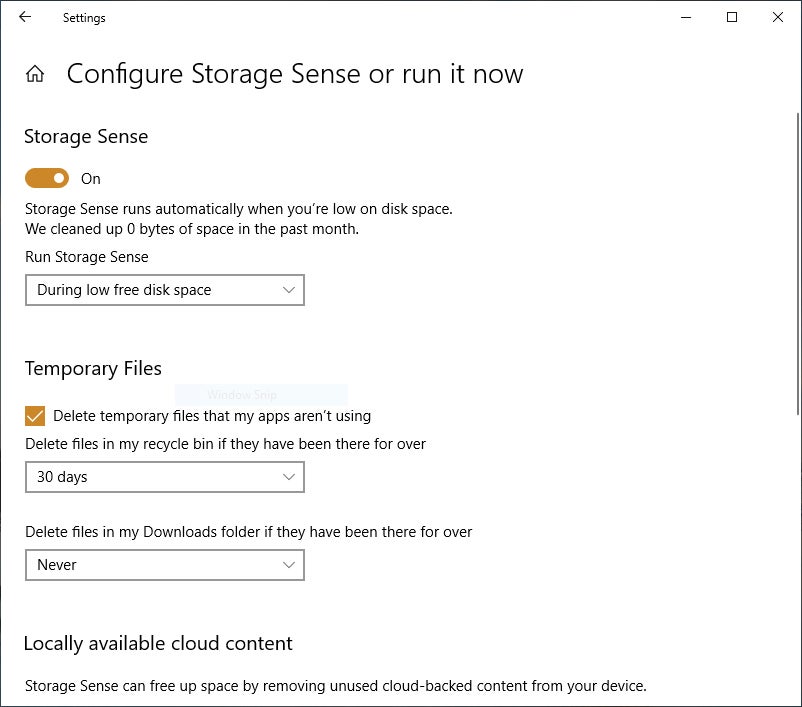
You can customize how Storage Sense works and as well utilize it to free upward even more space than it normally would. Underneath Storage Sense, click "Configure Storage Sense or run it now." From the screen that appears, you can change how ofttimes Storage Sense deletes files (every day, every week, every month or when your storage space gets low).
You tin can also tell Storage Sense to delete files in your Download folder, depending on how long they've been there, and set how long to wait to delete files in the Recycle Bin automatically. You can also have Storage Sense motility files from your PC to the cloud in Microsoft's OneDrive deject storage if they're not opened for a certain amount of time (every twenty-four hours, or every 14 days, 30 days or lx days).
 IDG
IDG Here'due south how to customize the way Storage Sense works, and to tell information technology to delete old versions of Windows. (Click image to enlarge it.)
You can also delete quondam versions of Windows that might be hogging infinite. At the bottom of the screen, check the box side by side to "Delete previous versions of Windows." Storage Sense will and then delete quondam versions of Windows ten days after you've installed an upgrade. Note that if yous do this, y'all won't exist able to revert to the older version of Windows.
9. Clean out your Registry
Under the Windows hood, the Registry tracks and controls but about everything virtually the way Windows works and looks. That includes data almost where your programs are stored, which DLLs they use and share, what file types should be opened past which plan, and just nigh everything else.
But the Registry is a very messy thing. When yous uninstall a program, for instance, that program's settings don't always go cleaned upward in the Registry. So over fourth dimension, it can get filled with countless outdated settings of all types. And that can lead to arrangement slowdowns.
Don't even retrieve of trying to clean any of this out yourself. It'due south impossible. To do information technology, y'all need a Registry Cleaner. At that place are enough bachelor, some costless and some paid. But at that place'south actually no demand to outright purchase ane, considering the complimentary Auslogics Registry Cleaner does a solid job.
Earlier using Auslogics or whatsoever other Registry Cleaner, you should back up your Registry so y'all tin can restore it if anything goes incorrect. (Auslogics Registry Cleaner does this for you as well, but it can't hurt to have it backed upward twice.) To do your own Registry backup, blazon regedit.ext in the search box, and then printing Enter. That runs the Registry editor. From the File menu, select Export. From the screen that appears, make certain to choose the "All" option in the Export range section at the bottom of the screen. Then choose a file location and file proper noun and click Salve. To restore the Registry, open the Registry editor, select Import from the File menu, then open the file you saved.
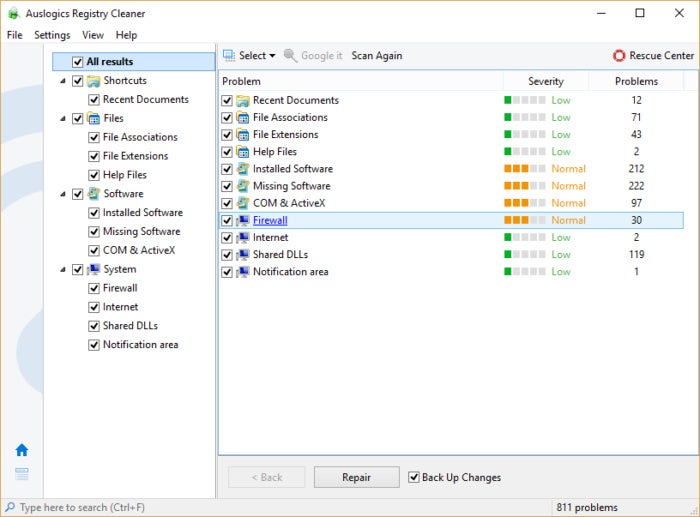
Now download, install and run Auslogics Registry Cleaner. On the left-hand side of the screen you can select the kinds of Registry bug you want to make clean up — for example, File Associations, Internet or Fonts. I generally select them all.
 IDG
IDG Auslogics Registry Cleaner scans for and fixes problems in your Windows Registry. (Click image to enlarge it.)
Next, tell it to browse the Registry for bug. To do that, click "Scan At present," and from the drop-down menu that appears, select Scan. That lets you first examine the Registry problems it finds. If you instead choose "Scan and Repair," information technology makes the fixes without you checking them.
It at present scans your Registry for errors, and then shows you what it found. It ranks the errors according to their severity to aid you lot decide which to fix. Click Repair when yous've made your conclusion, and make sure that "Back Upward Changes" is checked, so you can restore the Registry easily if something goes wrong.

Source: https://www.computerworld.com/article/3029168/16-ways-to-speed-up-windows-10.html
Posted by: dejongbuther.blogspot.com
0 Response to "Can You Use Jet Dry To Clean Windows"
Post a Comment